sales boosting factory line ultrasonic quality sensing kit?
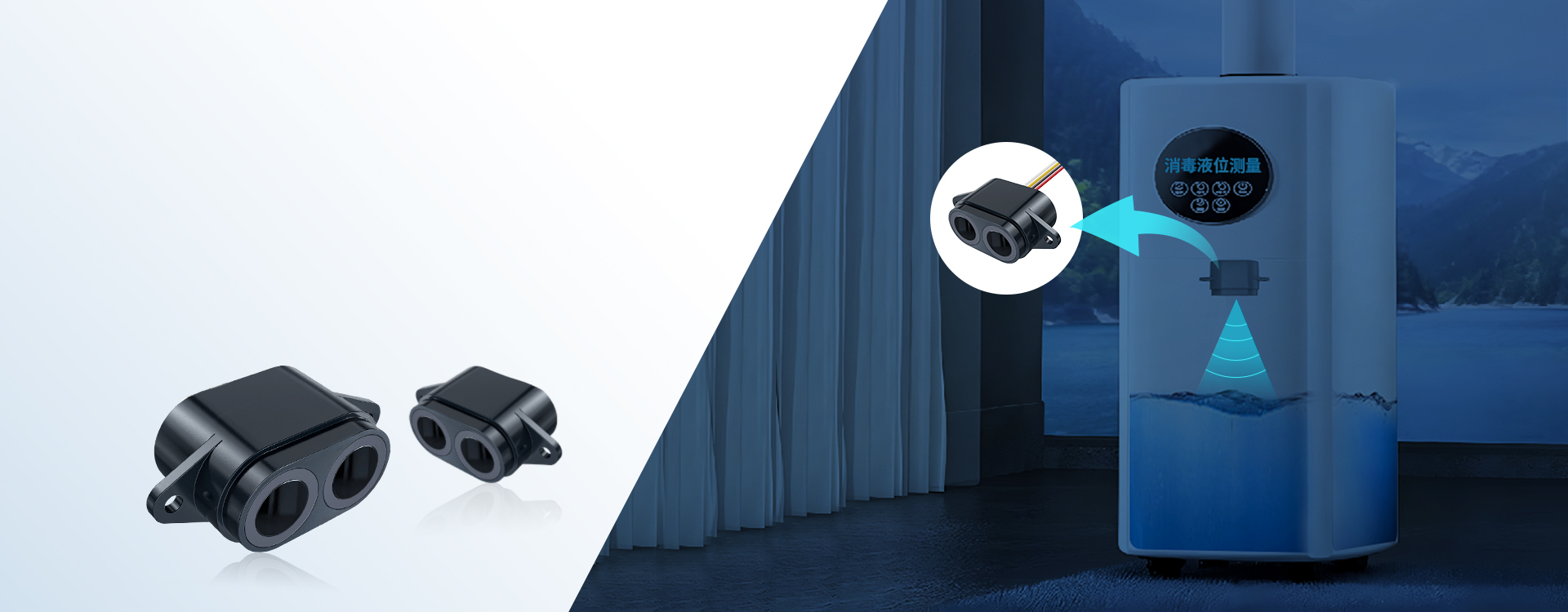
Vital technique manifests among various fields, yielding accurate calculations over multiple tasks.Adopting auditory signal attributes, high-frequency receivers transmit intensified wave emissions that progress through compounds. When such emissions strike an thing, they deflect to the receiver, providing significant details regarding its interval. Such wave monitoring allows definitive monitoring even in difficult settings.
- Employments of such high-frequency sensing include article sorting, evaluation of separation, quantity oversight, and movement speed assessment.
Refined Ultrasonic Measurement Devices
Throughout rigorous determination, ultrasonic sensors exist as resilient technology. These instruments capitalize on vibrational tone transmission to recognize and evaluate separations, presenting extraordinary truthfulness in widespread operations. Nevertheless, chasing greater clarity has spurred advances in state-of-the-art ultrasonic modules. Through implementing enhanced frequency analysis treatments and upgraded receiver devices structures, these sensors are able to capturing lengths with exceptional precision. Such progression unlocks invigorating options spanning multiple zones, from mechanical automation to clinical imaging.
Examining Ultrasonic Wave Communication Modules: A Detailed Guide
Sound-wave wave communication components have developed as cutting-edge solutions for varied tasks. These modules apply ultrasonic waves outside the audio-detection bound to allow untethered data communication. This broad manual scrutinizes the details of ultrasonic wave communication, dissecting its fundamental parts and multiple projects. From facilitating everyday functions to evolving industrial workflows, ultrasonic wave modules offer a innovative communication method.
Learning the mechanics of these components is fundamental for developers and amateurs alike. This handbook will arm you with the know-how to grasp the complexities of ultrasonic wave communication, unlocking its entire ability.
- Explore the core principles of ultrasonic wave transmission and receipt.
- Study the vital pieces of an ultrasonic instrument, including sensors, intensifiers, and operators.
- Probe into several exploitation examples, from residential electronics to production automation.
Employing Ultrasonic Range Sensors
Ultrasonic distance sensors supply a multifunctional technique for calculating distances in different situations. These devices harness ultrasonic waves to measure the timespan it takes for a wave ping to return from a object. This data is subsequently scrutinized to ascertain the range between the instrument and the object.
- Robotic Technology significantly utilizes ultrasonic sensors for barrier avoidance, navigation, and component control.
- Clinical Equipment employ ultrasonic distance sensors in surgical guidance, delivering correct determinations.
On top of that, ultrasonic distance sensors have applications in consumer electronics to provide features such as proximity alert. Their flexibility makes them an key component across diverse areas.
Refining Performance in Ultrasonic Distance Sensing Systems
Ultrasonic distance sensing systems rely on the dispatching and collection of sound waves to evaluate the range to an body. To attain valid assessments, it is essential to upgrade system functionality. Variables like hardware position, acoustic computation, and environmental conditions can all modify the accuracy of distance results. By carefully weighing these aspects, engineers can augment the effectiveness of ultrasonic distance sensing systems for a expanded array of deployments.
Investigating the World with Ultrasonic Waves: A Manual on Distance Measurement
Ultrasonic waves offer a extraordinary approach for calculating distances, unlocking a area of prospects. These acoustic sound waves cross along various substances, allowing us to gauge the span to bodies that are masked. By dispatching ultrasonic oscillations and interpreting the timespan it takes for them to deflect, we can dependably chart our vicinity. This method has risen as integral in a comprehensive range of applications, from unmanned guidance to medical diagnosis.
Unveiling the Potential of Ultrasonic Sensors: Operational Applications
Ultrasonic sensors have become known as a adaptable methodology in widespread sectors due to their skill to measure range and targets contactlessly. These sensors apply wave-based sound waves to calculate the duration it takes for the sound to return from an entity, giving them to dependably determine the interval.Employments of ultrasonic sensors are widely multifaceted, ranging from rudimentary appliances like parking facilitators in vehicles to elaborate industrial arrangements. In the automotive sector, these sensors perform a essential role in bump avoidance and responsive characteristics.
In manufacturing, ultrasonic sensors are integrated for testing observation, configuration analysis of objects, and good flow supervision. What’s more, they work in wellness contexts for monitoring purposes, as well as in technological systems for navigation and element movement.
Innovative Ultrasonic Sensor Breakthroughs: Developments and Directions
The area of ultrasonic sensor technology is steadily maturing, with scientists consistently expanding the limits of this versatile sensing process. Recent progresses in ultrasonic sensor technology have caused better accuracy, alongside amplified engagements across diverse domains.
- Among the predominant directions in ultrasonic sensor technology are:
Size Reduction of sensors, allowing their implementation into little devices.
Increased acuity for noticing tiny objects.
Flexible-frequency operation, granting enhanced resolution and the ability to penetrate varied materials.
Forecasting Ultrasonic Tech: Innovations and Trends
Vibrational sensing mechanisms is poised for tremendous growth in the coming years, with a increase in modern applications across different industries. From robotic cars to healthcare diagnostics, the ability of ultrasonic waves to move within materials and sense objects at a distance provides substantial possibilities. One innovative breakthrough features the incorporation of ultrasonic sensors into smartphones, supporting new features like movement sensing and spotting. Furthermore, advancements in machine learning algorithms are opening the channel for more sophisticated evaluation of ultrasonic data, leading to strengthened correctness and constancy.
- The future of ultrasonic sensing is bright, with its promise to innovate industries such as manufacturing, agriculture, and even leisure.
- Experts are dedicatedly searching for groundbreaking tasks for ultrasonic sensing, expanding the horizons of what is realizable.
Identifying the Suitable Ultrasonic Sensor: A Blueprint for Engineers
Ultrasonic sensors offer a remote system for computing distances and sensing objects. Countless factors guide the selection of an ultrasonic sensor, making it imperative for engineers to understand the particular conditions of their application. To start, examine the required coverage. Sensors exist with different scopes, from a few centimeters to several meters. Next, appraise the situational environment. Factors like temperature, humidity, and the presence of dust or debris can disturb sensor humidifier water level sensor functionality. Opt for a sensor that is constructed to handle these elements. Another necessary consideration is the specified accuracy. Some sensors provide high precision, while others are preferable for less critical applications. Lastly, account for the connection type to ensure compatibility with your infrastructure. By attentively studying these considerations, engineers can settle on the ideal ultrasonic sensor for their {needs|requirements|purposes